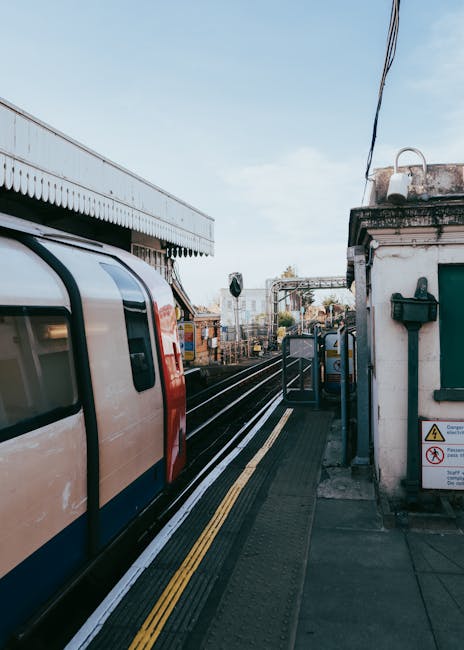
Streatham Hill Removals Guide for Narrow Streets and Parking
Moving in Streatham Hill can feel straightforward on paper, then suddenly become a bit of a puzzle when you're faced with tight Victorian streets, double parking, bin days, resident permits, and a van that looks larger once it arrives. This Streatham Hill removals guide for narrow streets and parking is designed to help you avoid the usual headaches: blocked access, time lost circling for space, awkward carrying distances, and those last-minute "where exactly can the van stop?" moments. Whether you're leaving a flat above a shop, a terraced house with limited frontage, or an apartment near busier roads, a little planning goes a long way.
Truth be told, most moving-day problems in this part of South London are not about the boxes. They're about access. The good news? With the right approach, narrow roads and parking restrictions are manageable. Below, you'll find practical steps, decision points, common mistakes, and a clear checklist you can actually use. If you need extra help with the physical move, services such as local removals, man and van support, or even packing services can make a big difference when space is tight.
Table of Contents
- Why Streatham Hill removals guide for narrow streets and parking Matters
- How Streatham Hill removals guide for narrow streets and parking Works
- Key Benefits and Practical Advantages
- Who This Is For and When It Makes Sense
- Step-by-Step Guidance
- Expert Tips for Better Results
- Common Mistakes to Avoid
- Tools, Resources and Recommendations
- Law, Compliance, Standards, or Best Practice
- Options, Methods, or Comparison Table
- Case Study or Real-World Example
- Practical Checklist
- Conclusion
- Frequently Asked Questions
Why Streatham Hill removals guide for narrow streets and parking Matters
Streatham Hill has the kind of streets that reward preparation. Many homes sit on roads where parking is limited, the turning space is tight, and a delivery van or removals vehicle can easily disrupt the flow if it arrives without a plan. Add in flats with narrow stairwells, shared entrances, and the occasional impatient driver behind you, and you have a moving day that can unravel quickly if access has not been thought through.
Why does this matter so much? Because removals are not just about transportation. They are about timing, access, and load efficiency. If a van has to park three doors away, carrying time increases. If there's nowhere safe to stop, the crew may need to wait while someone moves a car. If there's a restriction you overlooked, the whole schedule can slip. Small delays have a habit of stacking up. One awkward road can turn into a long afternoon very quickly.
For residents moving within the area, the issue is even more local. Streatham Hill often involves mixed housing types, bus routes, and side streets where visibility is poor. You might be able to get a car in, but not a large vehicle. And that's the difference between a tidy move and a stressful one. In our experience, the families and renters who plan access early tend to have the calmest moving day. No surprise there.
There's also a cost element. A longer carry, extra waiting time, or an unnecessary second trip can all affect the final bill. Even when the price is fixed, poor access can reduce efficiency and increase stress. So this guide is not just helpful; it's one of those "worth its weight in gold" bits of planning that can save you from a really messy morning.
How Streatham Hill removals guide for narrow streets and parking Works
The basic idea is simple: you reduce uncertainty before moving day. That means checking the road layout, thinking about where the van can stop, and deciding whether you need temporary parking arrangements, extra hands, smaller vehicle access, or a combination of the lot.
A good narrow-street removals plan usually works in four parts:
- Assess the access - look at the width of the street, any bends, parked cars, trees, raised kerbs, and whether there's room to unload safely.
- Match the vehicle to the street - a larger van may be ideal for volume, but a smaller vehicle can be far easier where parking is awkward.
- Plan the parking position - determine the nearest realistic stopping point for loading or unloading and consider the carry distance from there to the property.
- Prepare the property - clear hallways, reserve lift space if relevant, and make sure the route from front door to van is unobstructed.
That sounds obvious, but people still skip steps two and three. Then they end up doing an improvised shuttle run with boxes. Not ideal. If you're moving a flat, especially, it helps to think about the journey from the bedroom to the van as a single system. That's why pages like flat removals and small removals are useful starting points for anyone whose move depends on compact access rather than sheer volume.
One useful rule of thumb: if the street is tight enough that two cars cannot pass comfortably, assume the removals vehicle will need careful positioning, and do not leave parking as an afterthought. To be fair, that one decision shapes everything else.
Key Benefits and Practical Advantages
When a removals plan fits the street, the day feels lighter. Literally and mentally. Here are the main advantages of doing this properly:
- Less time wasted - fewer delays finding parking or waiting for a space to open.
- Lower risk of damage - shorter carrying distances mean less chance of knocking furniture, walls, or stair edges.
- Smoother access for movers - crews can work more efficiently when the van is positioned well.
- Better cost control - fewer hold-ups often mean fewer unexpected charges or add-ons.
- Less stress on the day - you know where things are going, and you are not improvising on the pavement.
There's another advantage people often overlook: better packing decisions. If you know parking is limited, you may choose to break down furniture in advance, label boxes more clearly, and keep essential items separate. That kind of preparation makes a real difference. It also helps if you're using removals and storage because it makes split moves easier to manage.
For example, if you've got a two-bedroom flat on a road with no on-street loading space, you can keep overflow items in secure storage or arrange short-term holding while you manage keys and access. It sounds small, but that flexibility can save a surprisingly chaotic second trip. Moving is rarely elegant. A good plan helps it become merely busy.
Who This Is For and When It Makes Sense
This guide is especially useful if you live or work in one of Streatham Hill's tighter residential streets, mews-style roads, or older properties with limited frontage. It's also relevant if you are:
- moving from a first- or second-floor flat with narrow stairs
- in a shared house where parking is already competitive
- moving on a weekday when commuter traffic is heavier
- dealing with a building that has restricted access or a small forecourt
- relocating a business from a compact office or mixed-use premises
- trying to move in or out around school run times or bin collection days
If any of that sounds familiar, you're in the right place. This is not just for people with huge house moves, either. In fact, the tighter the access, the more valuable a sensible plan becomes. A smaller move can still be a tricky move. That's one of those little truths people discover only after they've tried to squeeze a wardrobe through a hallway and regretted every decision leading up to it.
It also makes sense for students and renters who may not have many items but still face access issues. In those cases, using student storage or short-term storage can reduce the pressure if move-out and move-in dates do not line up neatly. Not everyone has the luxury of perfect timing, and that's fine.
Step-by-Step Guidance
Here's a practical way to approach a Streatham Hill move when streets are narrow and parking is limited.
1. Walk the route before moving day
Visit the property and look at the approach from the van's point of view. Can a large vehicle turn in? Is there space to stop without blocking junctions or driveways? Are there lamp posts, low branches, railings, or tight corners that could cause trouble? If you can, look at it at the same time of day as your move. Morning and evening can feel very different, especially where parking demand changes fast.
2. Estimate the carry distance
Measure the distance from the likely parking spot to the front door. Even a difference of 20 or 30 metres matters when you are carrying furniture or several rounds of boxes. Longer carries do not just take more time; they also increase fatigue. And fatigue leads to dropped boxes, slower loading, and more awkward pauses than anyone wants.
3. Choose the right vehicle size
There's often a trade-off between capacity and manoeuvrability. A larger van might reduce the number of trips, but a smaller van may be easier to park on a narrow street. If access is especially awkward, a man and van option can be a smart middle ground because it is often more flexible for tight parking and short carries.
4. Decide whether parking needs to be reserved or monitored
In some situations, it may help to arrange temporary parking support, assign someone to keep an eye on the space, or ask a neighbour to move a car in advance. Be realistic here. If you are in a street where spaces are always full by 8 a.m., do not assume one will magically appear. That would be nice, but it's not how it usually goes.
5. Prepare the property internally
Clear hallways, remove loose rugs, protect corners if possible, and keep a clear path from each room to the exit. If you live in a flat, tell neighbours about the move if it might affect shared access. A small amount of courtesy goes a long way in a close-knit building.
6. Pack for access, not just for storage
Label boxes by room and priority. Put essential items in one clearly marked bag. Break down beds or large furniture before the crew arrives if you can. Use smaller boxes for heavy items like books. This is the difference between neat theory and actual moving-day sanity.
7. Build in buffer time
Always allow extra time for parking, loading, and the unexpected. Someone may be parked too close. A lift may be slow. A key handover might run late. Give yourself breathing room rather than creating a schedule so tight it squeaks.
Expert Tips for Better Results
Here are the small things that tend to make the biggest difference.
- Use a staggered loading plan. Put the first-load essentials closest to the exit and keep heavier, less urgent items deeper inside.
- Keep parking communication simple. One person should own the parking plan. Too many people guessing can make things muddier, not clearer.
- Protect the path. Cardboard, blankets, or floor protection can help with tight doorways and shared hallways.
- Think in zones. Front door, pavement, van, and destination room. If each zone is clear, the move feels much less chaotic.
- Have a backup plan. If the preferred parking spot is gone, decide in advance where the fallback stop will be.
A practical example: one family moving from a terrace off a narrow Streatham Hill side street realised the only sensible stop was half a house away from the front door. They packed heavy kitchen boxes into smaller loads, used two people to stage items at the threshold, and kept the van opening as close as possible to the pavement. Nothing flashy. Just a good plan and no drama. The move finished on time, which felt like a minor miracle, to be fair.
If you want a deeper support layer, especially for larger furniture or awkward layouts, furniture storage can help if you are not ready to move everything at once. That is often more practical than forcing a full home move into one difficult parking window.
Common Mistakes to Avoid
Here's where a lot of removals go sideways.
- Assuming parking will be easy. It rarely is, not in a busy part of London and not on a narrow residential road.
- Booking a vehicle that is too large. Bigger is not always better if it cannot park safely near the property.
- Ignoring carrying distances. A short-sounding walk can become tiring fast with furniture and repeated trips.
- Leaving packing until the night before. That usually means worse labelling, slower loading, and more breakage risk.
- Forgetting about neighbours and shared access. If you block an entrance or a driveway, you may end up losing valuable time dealing with complaints.
- Not separating essentials. If your kettle, charger, and key documents are buried, the first evening in the new place becomes unnecessarily annoying.
Another common mistake is not matching the plan to the property type. A ground-floor flat with a narrow street needs a different approach from a three-bed house on a quieter road. If you're moving from a house, consider the broader planning involved in house removals. If your move is smaller or more compact, the approach should be lighter and more flexible.
Tools, Resources and Recommendations
You do not need a giant toolkit, but a few practical items help more than people expect.
- Measuring tape for checking furniture dimensions and door widths.
- Notebook or phone notes for recording parking options and contact details.
- Label stickers and marker pens so boxes are identifiable at a glance.
- Blankets or furniture covers for protecting items during a longer carry.
- Phone photos of the street, parking signs, entry route, and any potential pinch points.
For commercial moves, a bit more planning is sensible. If you're moving an office from a tight street or shared building, office removals and office storage may be relevant if equipment or files need a temporary home. That can keep the workspace moving without forcing everything through a narrow access window in one go.
For paperwork, it's also worth thinking about document storage if files need to be protected while the office is in transition. It keeps the moving area less cluttered, which is handy when every square metre counts. And yes, one less box in the hallway can be the difference between easy and irritating.
Law, Compliance, Standards, or Best Practice
Parking and loading in London can involve local restrictions, resident permit zones, yellow lines, and other traffic rules. The exact arrangements depend on the street and local authority, so you should always check the current on-street signs and any booking or access arrangements that apply to your property. If you are arranging a move for a busy street, it is wise to do so well in advance and make sure your plan does not block access for emergency vehicles, pedestrians, or neighbours.
From a practical best-practice point of view, a removals operator should aim to move safely, avoid unnecessary obstruction, and handle goods with reasonable care. That means sensible lifting, secure loading, and clear communication with the customer. If storage is part of the move, choosing mobile self storage or self storage can reduce the pressure on a congested moving day by breaking the process into stages.
Insurance is another sensible area to think about. Always check what cover applies to your move and what the customer is expected to declare or protect. For that sort of reassurance, a page like insurance and safety is a useful reminder to review responsibilities before moving day. The basic rule is simple: do not assume. Ask, confirm, and keep records if needed.
There's also a general safety angle. Tight streets mean more interaction with traffic and pedestrians, so visibility, careful parking, and patient loading matter. Not glamorous, but very real.
Options, Methods, or Comparison Table
Choosing the right moving method depends on access, volume, and how much time you have. Here's a quick comparison to help you decide.
| Option | Best for | Pros | Trade-offs |
|---|---|---|---|
| Large removals van | Bigger house moves with decent access | Fewer trips, efficient for high volume | Harder to park on narrow streets |
| Smaller van or man and van | Tight roads, flats, smaller loads | More flexible, easier to position | May need extra trips if volume is high |
| Removals with storage | Staged or uncertain move dates | Reduces pressure on moving day | Requires planning around storage handover |
| Self storage first, move later | Overlapping dates or access problems | Creates breathing room, keeps possessions secure | Adds a separate step to manage |
If your road is awkward but your move volume is moderate, a smaller vehicle plus better packing usually beats trying to force a bigger one into the street. If your dates are messy or completion is uncertain, using removals alongside storage is often the calmer route. Calm is underrated. Very underrated.
Case Study or Real-World Example
Imagine a couple moving from a second-floor flat in Streatham Hill into a new place a few streets away. Their old road has parking on one side only, with cars already lined up by late morning. The staircase is narrow, there's no lift, and the dining table barely fits through the hallway without turning it sideways.
They start early. First, they measure the furniture and decide which items must go out first. Second, they pack books into smaller boxes instead of one heavy monster box that nobody wants to lift. Third, they arrange for the van to arrive during a quieter part of the morning and keep one person outside to watch the parking situation while the other finishes final checks indoors.
It isn't a perfect cinematic move. There are still pauses. Someone has to shift a car. One chair leg catches the doorway. The kettle ends up in the wrong box because, well, moving days do that. But because the access plan was realistic, the moving crew can keep working instead of improvising every five minutes. The result is a move that feels controlled, not frantic. That matters more than people think.
If they had needed to leave some items behind temporarily, short-term storage would have been a good bridge. And if the move had involved larger, awkward household items, household storage could have taken the pressure off. The point is not to make the move bigger. It's to make the day manageable.
Practical Checklist
Use this checklist a few days before moving.
- Check the street width and likely parking spaces near both addresses.
- Confirm whether any restrictions apply on your moving day.
- Measure large items, stairways, and door frames.
- Decide whether a larger van or a smaller vehicle is more suitable.
- Book help early if you need lifting support or extra hands.
- Label boxes clearly by room and priority.
- Pack an essentials bag with chargers, documents, keys, medication, and toiletries.
- Notify neighbours if shared access might be affected.
- Protect floors and corners if items will pass through tight spaces.
- Build in a time buffer for parking, loading, and delays.
- Keep a backup plan if the preferred stop is unavailable.
- Consider storage if move-in and move-out timing do not line up neatly.
Expert summary: in narrow Streatham Hill streets, the winning move is almost always the simple one: plan the parking, reduce the carry distance, keep the load organised, and leave yourself some breathing room. Everything else follows from that.
Conclusion
A move in Streatham Hill does not have to be stressful just because the streets are tight. The trick is to treat parking and access as part of the move itself, not as an afterthought. Once you know where the van can stop, how far things need to be carried, and whether storage or a smaller vehicle would make life easier, the whole day becomes more predictable.
There's a real comfort in that. You don't need a perfect move. You just need a workable one. And in a place where roads can be narrow and parking scarce, "workable" is a very good result indeed.
If you're planning a move and want a more flexible approach, it can help to explore options like removals and storage or speak to a team that understands local access issues. Small decisions now can spare you a lot of running around later.
Get a free quote today and see how much you can save.
Sometimes the best moving day is the one that feels almost boring. That's the goal, really.
Frequently Asked Questions
How do I plan a removals van for a narrow street in Streatham Hill?
Start by checking the street width, parking availability, and the distance from the nearest realistic stopping point to your front door. If access is tight, choose a vehicle size that can park safely rather than one that only looks efficient on paper. A smaller van can often be the smarter choice.
Do I need to reserve parking for moving day?
It depends on the street and the restrictions in place. Some moves can be handled with careful timing and a good loading position, while others need more proactive parking planning. If the road is usually full, do not leave it to chance.
What if the removals van cannot park outside my property?
That happens quite often in narrow London streets. The key is to agree a fallback position in advance and keep the carry route as short and clear as possible. It is better to have a planned alternative than to improvise under pressure.
Is a man and van service better for Streatham Hill's tight roads?
Often, yes. A more compact vehicle can be easier to position on narrow streets and may suit smaller or medium-sized moves. It also tends to be more flexible where parking is difficult or access is awkward.
How can I reduce the carrying distance on moving day?
Park as close as safely possible, clear the path inside the property, and stage boxes near the exit before the van arrives. Good packing and clear labelling also help reduce back-and-forth trips.
What should I pack first for a move with parking problems?
Pack non-essential items first, then create a separate essentials box or bag for the items you will need immediately. Heavy items should go into smaller boxes so they are easier to carry if parking is not ideal.
Can storage help if my move dates do not line up?
Yes, very much so. Storage can bridge the gap between properties, which is especially useful if access is awkward or completion dates change. Services such as long-term storage and short-term storage can both be useful depending on timing.
What should I do if I live in a flat with a narrow stairwell?
Measure furniture carefully, disassemble large items where possible, and make sure the route from the flat to the street is clear. If your move is flat-based, flat removals guidance is especially relevant because the staircase often becomes the main bottleneck.
Are there special safety concerns with tight street removals?
Yes. You need to think about pedestrians, traffic, visibility, and keeping pathways clear. Safe loading and careful vehicle positioning matter even more when space is limited. No one wants a near miss on a busy street.
How far in advance should I plan a Streatham Hill move?
As early as you can, especially if parking is tight or if you are moving during a busy period. Even a few extra days can help you organise packing, storage, vehicle size, and access checks without rushing.
What is the biggest mistake people make with narrow-street removals?
Assuming parking will sort itself out. That single assumption causes a lot of stress. The best moves are the ones where access is checked early, the vehicle choice fits the street, and the loading plan is realistic from the start.
Where can I get help if I need a local move with storage included?
If you need a combined approach, look at local removals and removals and storage options. They are especially useful when you want a move that fits the realities of Streatham Hill rather than fighting them.